
Beyond Control Read online
Page 17
After dinner, he was ushered into Potterley’s study and he was brought up sharply at the threshold. The walls were simply lined with books.
Not merely films. There were films, of course, but these were far outnumbered by the books—print on paper. He wouldn’t have thought so many books would exist in usable condition.
That bothered Foster. Why should anyone want to keep so many books at home? Surely all were available in the university library, or, at the very worst, at the Library of Congress, if one wished to take the minor trouble of checking out a microfilm.
There was an element of secrecy involved in a home library. It breathed of intellectual anarchy. That last thought, oddly, calmed Foster. He would rather have Potterley be an authentic anarchist than a play-acting agent provocateur.
And now the hours began to pass quickly and astonishingly.
“You see,” Potterley said, in a clear, unflurried voice, “it was a matter of finding, if possible, anyone who had ever used chronoscopy in his work. Naturally, I couldn’t ask baldly, since that would be unauthorized research.”
“Yes,” said Foster dryly. He was a little surprised such a small consideration would stop the man.
“I used indirect methods—”
He had. Foster was amazed at the volume of correspondence dealing with small disputed points of ancient Mediterranean culture which somehow managed to elicit the casual remark over and over again: “Of course, having never made use of chronoscopy—” or, “Pending approval of my request for chronoscopic data, which appears unlikely at the moment—”
“Now these aren’t blind questionings,” said Potterley.
“There’s a monthly booklet put out by the Institute for Chronoscopy in which items concerning the past as determined by time viewing are printed. Just one or two items.
“What impressed me first was the triviality of most of the items, their insipidity. Why should such researches get priority over my work? So I wrote to people who would be most likely to do research in the directions described in the booklet. Uniformly, as I have shown you, they did not make use of the chronoscope. Now let’s go over it point by point.”
At last Foster, his head swimming with Potterley’s meticulously gathered details, asked, “But why?”
“I don’t know why,” said Potterly, “but I have a theory. The original invention of the chronoscope was by Sterbinski—you see, I know that much—and it was well publicized. But then the government took over the instrument and decided to suppress further research in the matter or any use of the machine. But then, people might be curious as to why it wasn’t being used. Curiosity is such a vice, Dr. Foster.”
Yes, agreed the physicist to himself.
“Imagine the effectiveness, then,” Potterley went on, “of pretending that the chronoscope was being used. It would then be not a mystery, but a commonplace. It would no longer be a fitting object for legitimate curiosity or an attractive one for illicit curiosity.”
“You were curious,” pointed out Foster.
Potterley looked a trifle restless. “It was different in my case,” he said angrily. “I have something that must be done, and I wouldn’t submit to the ridiculous way in which they kept putting me off.”
A bit paranoid, too, thought Foster gloomily.
Yet he had ended up with something, paranoid or not. Foster could no longer deny that something peculiar was going on in the matter of neutrinics.
But what was Potterley after? That still bothered Foster.
If Potterley didn’t intend this as a test of Foster’s ethics, what did he want?
Foster put it to himself logically. If an intellectual anarchist with a touch of paranoia wanted to use a chronoscope and was convinced that the powers-that-be were deliberately standing in his way, what would he do?
Supposing it were I, he thought. What would I do?
He said slowly, “Maybe the chronoscope doesn’t exist at all.”
Potterley started. There was almost a crack in his general calmness. For an instant, Foster found himself catching a glimpse of something not at all calm.
But the historian kept his balance and said, “Oh, no, there must be a chronoscope.”
“Why? Have you seen it? Have I? Maybe that’s the explanation of everything. Maybe they’re not deliberately holding out on a chronoscope they’ve got. Maybe they haven’t got it in the first place.”
“But Sterbinski lived. He built a chronoscope. That much is a fact.”
“The books say so,” said Foster coldly.
“Now listen.” Potterley actually reached over and snatched at Foster’s jacket sleeve. “I need the chronoscope. I must have it. Don’t tell me it doesn’t exist. What we’re going to do is find out enough about neutrinics to be able to—”
Potterley drew himself up short.
Foster drew his sleeve away. He needed no ending to that sentence. He supplied it himself. He said, “Build one of our own?”
Potterley looked sour, as though he would rather not have said it point-blank. Nevertheless, he said, “Why not?”
“Because that’s out of the question,” said Foster. “If what I’ve read is correct, then it took Sterbinski twenty years to build his machine and several millions in composite grants. Do you think you and I can duplicate that illegally? Suppose we had the time, which we haven’t, and suppose I could learn enough out of books, which I doubt, where would we get the money and equipment? The chronoscope is supposed to fill a five-story building, for Heaven’s sake.”
“Then you won’t help me?”
“Well, I’ll tell you what. I have one way in which I may be able to find out something—”
“What is that?” asked Potterley at once.
“Never mind. That’s not important. But I may be able to find out enough to tell you whether the government is deliberately suppressing research by chronoscope. I may confirm the evidence you already have or I may be able to prove that your evidence is misleading. I don’t know what good it will do you in either case, but it’s as far as I can go. It’s my limit.”
Potterley watched the young man go finally. He was angry with himself. Why had he allowed himself to grow so careless as to permit the fellow to guess that he was thinking in terms of a chronoscope of his own? That was premature.
But then why did the young fool have to suppose that a chronoscope might not exist at all?
It had to exist. It had to. What was the use of saying it didn’t?
And why couldn’t a second one be built? Science had advanced in the fifty years since Sterbinski. All that was needed was knowledge.
Let the youngster gather knowledge. Let him think a small gathering would be his limit. Having taken the path to anarchy, there would be no limit. If the boy was not driven onward by something in himself, the first steps would be error enough to force the rest. Potterley was quite certain he would not hesitate to use blackmail.
Potterley waved a last good-by and looked up. It was beginning to rain.
Certainly! Blackmail, if necessary, but he would not be stopped.
Foster steered his car across the bleak outskirts of the town and scarcely noticed the rain.
He was a fool, he told himself, but he couldn’t leave things as they were. He had to know. He damned his streak of undisciplined curiosity, but he had to know.
But he would go no further than Uncle Ralph. He swore mightily to himself that it would stop there. In that way, there would be no evidence against him, no real evidence. Uncle Ralph would be discreet.
In a way, he was secretly ashamed of Uncle Ralph. He hadn’t mentioned him to Potterley partly out of caution and partly because he did not wish to witness the lifted eyebrow, the inevitable half-smile. Professional science writers, however useful, were a little outside the pale, fit only for patronizing contempt. The fact that, as a class, they made more money than did research scientists, only made matters worse, of course.
Still, there were times when a science writer in the family could b
e a convenience. Not being really educated, they did not have to specialize. Consequently, a good science writer knew practically everything . . . And Uncle Ralph was one of the best.
Ralph Nimmo had no college degree and was rather proud of it. “A degree,” he once said to Jonas Foster, when both were considerably younger, “is a first step down a ruinous highway. You don’t want to waste it, so you go on to graduate work and doctoral research. You end up a thoroughgoing ignoramus on everything in the world except for one subdivisional sliver of nothing.
“On the other hand, if you guard your mind carefully and keep it blank of any clutter of information till maturity is reached, filling it only with intelligence and training it only in clear thinking, you then have a powerful instrument at your disposal and you can become a science writer.”
Nimmo received his first assignment at the age of twenty-five, after he had completed his apprenticeship and been out in the field for less than three months. It came in the shape of a clotted manuscript whose language would impart no glimmering of understanding to any reader, however qualified, without careful study and some inspired guesswork. Nimmo took it apart and put it together again (after five long and exasperating interviews with the authors, who were biophysicists), making the language taut and meaningful and smoothing the style to a pleasant gloss.
“Why not?” he would say tolerantly to his nephew, who countered his strictures on degrees by berating him with his readiness to hang on the fringes of science. “The fringe is important. Your scientists can’t write. Why should they be expected to? They aren’t expected to be grand masters at chess or virtuosos at the violin, so why expect them to know how to put words together? Why not leave that for specialists, too?
“Good Lord, Jonas, read your literature of a hundred years ago. Discount the fact that the science is out of date and that some of the expressions are out of date. Just try to read it and make sense out of it. It’s just jaw-cracking, amateurish. Papers are published uselessly; whole articles which are either nonsignifant, noncomprehensible, or both.”
“But you don’t get recognition, Uncle Ralph,” protested young Foster, who was getting ready to start his college career and was rather starry-eyed about it. “You could be a terrific researcher.”
“I get recognition,” said Nimmo. “Don’t think for a minute I don’t. Sure, a biochemist or a strato-meteorologist won’t give me the time of day, but they pay me well enough. Just find out what happens when some first-class chemist finds the Commission has cut his year’s allowance for science writing. He’ll fight harder for enough funds to afford me, or someone like me, than to get a recording ionograph.”
He grinned broadly, and Foster grinned back. Actually, he was proud of his paunchy, round-faced, stub-fingered uncle, whose vanity made him brush his fringe of hair futilely over the desert on his pate and made him dress like an unmade haystack because such negligence was his trademark. Ashamed, but proud, too.
And now Foster entered his uncle’s cluttered apartment in no mood at all for grinning. He was nine years older now and so was Uncle Ralph. For nine more years, papers in every branch of science had come to him for polishing and a little of each had crept into his capacious mind.
Nimmo was eating seedless grapes, popping them into his mouth one at a time. He tossed a bunch to Foster, who caught them by a hair, then bent to retrieve individual grapes that had torn loose and fallen to the floor.
“Let them be. Don’t bother,” said Nimmo carelessly. “Someone comes in here to clean once a week. What’s up? Having trouble with your grant application write-up?”
“I haven’t really got into that yet.”
“You haven’t? Get a move on, boy. Are you waiting for me to offer to do the final arrangement?”
“I couldn’t afford you, Uncle.”
“Aw, come on. It’s all in the family. Grant me all popular publication rights and no cash need change hands.”
Foster nodded. “If you’re serious, it’s a deal.”
“It’s a deal.”
It was a gamble, of course, but Foster knew enough of Nimmo’s science writing to realize it could pay off. Some dramatic discovery of public interest on primitive man or on a new surgical technique, or on any branch of spationautics could mean a very cash-attracting article in any of the mass media of communication.
It was Nimmo, for instance, who had written up, for scientific consumption, the series of papers by Bryce and co-workers that elucidated the fine structure of two cancer viruses, for which job he asked the picayune payment of fifteen hundred dollars, provided popular publication rights were included. He then wrote up, exclusively, the same work in semidramatic form for use in trimensional video for a twenty-thousand-dollar advance plus rental royalties that were still coming in after five years.
Foster said bluntly, “What do you know about neutrinics, Uncle?”
“Neutrinics?” Nimmo’s small eyes looked surprised. “Are you working in that? I thought it was pseudo-gravitic optics.”
“It is p.g.o. I just happen to be asking about neutrinics.”
“That’s a devil of a thing to be doing. You’re stepping out of line. You know that, don’t you?”
“I don’t expect you to call the Commission because I’m a little curious about things.”
“Maybe I should before you get into trouble. Curiosity is an occupational danger with scientists. I’ve watched it work. One of them will be moving quietly along on a problem, then curiosity leads him up a strange creek. Next thing you know they’ve done so little on their proper problem, they can’t justify for a project renewal. I’ve seen more—”
“All I want to know,” said Foster patiently, “is what’s been passing through your hands lately on neutrinics.” Nimmo leaned back, chewing at a grape thoughtfully. “Nothing. Nothing ever. I don’t recall ever getting a paper on neutrinics.”
“What!” Foster was openly astonished. “Then who does get the work?”
“Now that you ask,” said Nimmo, “I don’t know. Don’t recall anyone talking about it at the annual conventions. I don’t think much work is being done there.”
“Why not?”
“Hey, there, don’t bark. I’m not doing anything. My guess would be—”
Foster was exasperated. “Don’t you know?”
“Hmp. I’ll tell you what I know about neutrinics. It concerns the applications of neutrino movements and the forces involved—”
“Sure. Sure. Just as electronics deals with the applications of electron movements and the forces involved, and pseudo-gravities deals with the applications of artificial gravitational fields. I didn’t come to you for that. Is that all you know?”
“And,” said Nimmo with equanimity, “neutrinics is the basis of time viewing and that is all I know.”
Foster slouched back in his chair and massaged one lean cheek with great intensity. He felt angrily dissatisfied. Without formulating it explicitly in his own mind, he had felt sure, somehow, that Nimmo would come up with some late reports, bring up interesting facets of modem neutrinics, send him back to Potterley able to say that the elderly historian was mistaken, that his data were misleading, his deductions mistaken.
Then he could have returned to his proper work.
But now . . .
He told himself angrily: So they’re not doing much work in the field. Does that make it deliberate suppression? What if neutrinics is a sterile discipline? Maybe it is. I don’t know. Potterley doesn’t. Why waste the intellectual resources of humanity on nothing? Or the work might be secret for some legitimate reason. It might be . . .
The trouble was, he had to know. He couldn’t leave things as they were now. He couldn’t!
He said, “Is there a text on neutrinics, Uncle Ralph? I mean a clear and simple one. An elementary one.”
Nimmo thought, his plump cheeks puffing out with a series of sighs. “You ask the damnedest questions. The only one f ever heard of was Sterbinski and somebody. I’ve never seen it, but
I viewed something about it once . . . . Sterbinski and LaMarr, that’s it.”
“Is that the Sterbinski who invented the chronoscope?”
“I think so. Proves the book ought to be good.”
“Is there a recent edition? Sterbinski died thirty years ago.
Nimmo shrugged and said nothing.
“Can you find out?”
They sat in silence for a moment, while Nimmo shifted his bulk to the creaking tune of the chair he sat on. Then the science writer said, “Are you going to tell me what this is all about?”
“I can’t. Will you help me anyway, Uncle Ralph? Will you get me a copy of the text?”
“Well, you’ve taught me all I know on pseudo-gravities. I should be grateful. Tell you what—I’ll help you on one condition.”
“Which is?”
The older man was suddenly very grave. “That you be careful, Jonas. You’re obviously way out of line, whatever you’re doing. Don’t blow up your career just because you’re curious about something you haven’t been assigned to and which is none of your business. Understand?” Foster nodded, but he hardly heard. He was thinking furiously.
A full week later, Ralph Nimmo eased his rotund figure into Jonas Foster’s on-campus two-room combination and said, in a hoarse whisper, “I’ve got something.”
“What?” Foster was immediately eager.
“A copy of Sterbinski and LaMarr.” He produced it, or rather a comer of it, from his ample topcoat.
Foster almost automatically eyed door and windows to make sure they were closed and shaded respectively, then held out his hand.
The film case was flaking with age, and when he cracked it the film was faded and growing brittle. He said sharply, “Is this all?”
“Gratitude, my boy, gratitude!” Nimmo sat down with a grunt, and reached into a pocket for an apple.
“Oh, I’m grateful, but it’s so old.”
“And lucky to get it at that. I tried to get a film run from the Congressional Library. No go. The book was restricted.”
“Then how did you get this?”
“Stole it.” He was biting crunchingly around the core. “New York Public.”
![[What Might Have Been 02] Alternate Heroes Read online](http://i1.bookreadfree.com/27/what_might_have_been_02_alternate_heroes_preview.jpg) [What Might Have Been 02] Alternate Heroes
[What Might Have Been 02] Alternate Heroes![[What Might Have Been 01] Alternate Empires Read online](http://i1.bookreadfree.com/01/what_might_have_been_01_alternate_empires_preview.jpg) [What Might Have Been 01] Alternate Empires
[What Might Have Been 01] Alternate Empires SEDUCTIVE: A Contemporary Romance Anthology
 A Year of Love
 Super Daddies: A Naughty Nerdy Romantic Comedy Anthology
 Mystical Xmas: Paranormal Romance Anthology Box Set
![[What Might Have Been 04] Alternate Americas Read online](http://i1.bookreadfree.com/06/what_might_have_been_04_alternate_americas_preview.jpg) [What Might Have Been 04] Alternate Americas
[What Might Have Been 04] Alternate Americas 9 Tales of Space and Time
 Assignment in Tomorrow
![[What Might Have Been 03] Alternate Wars Read online](http://i1.bookreadfree.com/i/03/16/what_might_have_been_03_alternate_wars_preview.jpg) [What Might Have Been 03] Alternate Wars
[What Might Have Been 03] Alternate Wars The Complete Dangerous Visions
 The IF Reader of Science Fiction
 Holiday in the Heart
 Torquere Press Sips and Shots
 Possess: An Alpha Anthology
 Beyond Control
 Bad Boys Under the Mistletoe: A Begging for Bad Boys Collection
 Hugo Awards: The Short Stories (Volume 3)
 The Second IF Reader of Science Fiction
 Astounding Science Fiction Stories Vol 1
 What Happens Over Spring Break: A Short Story Anthology
 eSteampunk Vol. 01 No. 02
 SHADOWRUN: Spells and Chrome (shadowrun)
 Dark Tales
 Getting Schooled (Craving #9)
 The Hellfire Book of Beltane Volume One
 The Alpha's
 The Future Is Short
 From the Heart: A Valentine's Day Anthology
 Reckless: A Bad Boyz Anthology
 LOL #3 Romantic Comedy Anthology
 A Christmas Seduction: A Regency Anthology
 All a Cowboy Wants for Christmas
 Hugo Awards: The Short Stories (Volume 2)
 The Golden Age of Science Fiction Novels Vol 01
 The Sirens of SaSS Anthology
 Mistletoe & Kisses
 Explorers of Space
 Time Travel Omnibus Volume 2
 Dead Science: A Zombie Anthology
 Beer Goggles Anthology
 Apexology: Horror
 Heat Wave: A Summer Loving Anthology
 Fall in Love
 Love Under the Mistletoe
 Hook & Ladder 69: Eighteen Authors...One Sexy Firehouse.
 LOL #2 Romantic Comedy Anthology - Volume 2 - Even More All-New Romance Stories by Bestselling Authors (LOL Romantic Comedy Anthology #2)
 Off the Beaten Path: Eight Tales of the Paranormal
![Best New Zombie [3] - Best New Zombie Tales, Vol. 3 Read online](http://i1.bookreadfree.com/i/03/25/best_new_zombie_3_-_best_new_zombie_tales_vol_3_preview.jpg) Best New Zombie [3] - Best New Zombie Tales, Vol. 3
Best New Zombie [3] - Best New Zombie Tales, Vol. 3 The Golden Age of Science Fiction Novels Vol 05
 Alphas of Sin
 Halloween Spirits: 11 Tales for the Darkest Night
 Night Shift 2
 Ellora's Cavemen: Jewels of the Nile II
 Hot for the Holidays (21 Holiday Short Stories): A Collection of Naughty and Nice Holiday Romances
 Of Heaven and Hell
 12 Christmas Romances To Melt Your Heart
 '90s Playlist (Romance Rewind #1)
 Bleed Blue 69: Twenty-Five Authors…One Sexy Police Station
 The Cthulhu Mythos Megapack (40 Modern and Classic Lovecraftian Tales)
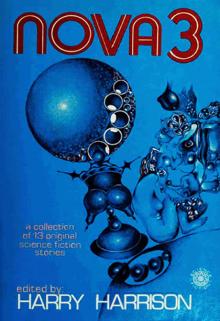 Nova 3
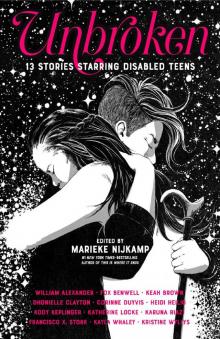 Unbroken: 13 Stories Starring Disabled Teens
 Dead Men (and Women) Walking
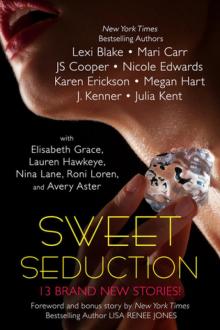 Sweet Seduction
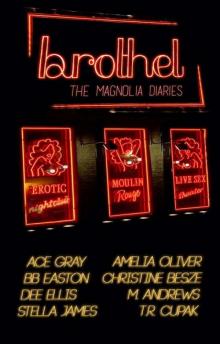 Brothel: The Magnolia Diaries
 Rogues (A Boys Behaving Badly Anthology #1)
 Best New Zombie Tales, Vol. 3
![The Hellfire Bo [1] - The Hellfire Book of Beltane Volume One Read online](http://i1.bookreadfree.com/i1/04/06/the_hellfire_bo_1_-_the_hellfire_book_of_beltane_volume_one_preview.jpg) The Hellfire Bo [1] - The Hellfire Book of Beltane Volume One
The Hellfire Bo [1] - The Hellfire Book of Beltane Volume One Horror in Paradise
 Time Travel Omnibus Volume 1
 More Than Words: Stories of Courage
 River Walk: Ten Kinky Collaborations
 F*cking Awkward
 Hearts of England
 The Golden Age of Science Fiction Novels Vol 03
 Drunk in Love
 Up and Coming: Stories by the 2016 Campbell-Eligible Authors
 Descended from Darkness: Apex Magazine Vol I
 Dominant Persuasions Anthology: 12 Tales of D/s, Where Mastery Meets Passion
 The Golden Age of Science Fiction Novels Vol 04
 Passion in Portland 2016 Anthology
 Men of Mayhem
 The Dirty Anthology
 Hot For Teacher
 Nova 2
 eSteampunk Vol. 01 No. 03
 Afternoon Tea Mysteries Vol Three
 Romance in the Rain
 Tales From the Crossroad Volume 1
 A Very Alpha Christmas
 Nova 1
 Once: A Collection of Sinfully Sexy and Twisted Tales
 Nuts About You: A Testicular Cancer Anthology
 From the Street (shadowrun stories)
 Box of 1Night Stands: 21 Sizzling Nights
 Descended from Darkness: Vol II
 Pink Shades of Words: Walk 2016
 The Art of Taking Chances
 The Butterfly Box_A SASS Anthology
 Harlan County Horrors
![Afternoon Tea Mysteries [Vol Three] Read online](http://i1.bookreadfree.com/i2/04/12/afternoon_tea_mysteries_vol_three_preview.jpg) Afternoon Tea Mysteries [Vol Three]
Afternoon Tea Mysteries [Vol Three] The Golden Age of Science Fiction Novels Vol 02
 Ellora's Cavemen: Jewels of the Nile III